The leadoff spot was a revolving door for the Mariners all season. Victor Robles’ April injury forced an early course correction, and subsequent experiments produced mixed results at best. J.P. Crawford received an extended look but closed his final 35 starts atop the order with a .261 on-base percentage — a non-starter for a team with championship aspirations.
The real damage, however, came when the Mariners moved Randy Arozarena into the leadoff role.
The decision came after Seattle upgraded the lineup by adding Josh Naylor and Eugenio Suárez, making the logic even murkier. Arozarena’s .351 OBP at the time was respectable, but his offensive DNA has never screamed “table-setter.” He is a power-first hitter, prone to swing-and-miss, best suited to driving in runs rather than starting rallies.
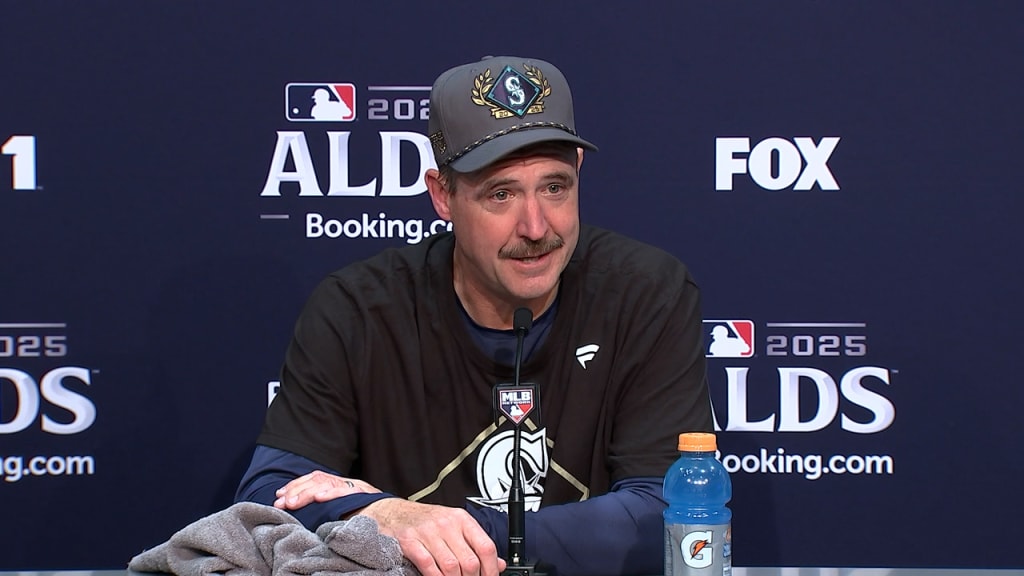
Instead of unlocking the offense, the move unraveled Arozarena after his All-Star first half. By the time manager Dan Wilson finally pushed him back down the order midway through the ALCS, the damage was done:
-
August: .680 OPS, 5 HR
-
September: .596 OPS, 1 HR
-
October: .536 OPS, 1 HR
The lack of lineup cohesion showed up most brutally in October. Seattle hit 20 home runs in the postseason — but only six came with a runner on base. Too many empty swings. Too much pressure on every at-bat.
In 2026, the fix is straightforward. A trade for Brendan Donovan would immediately stabilize the leadoff spot. Failing that, Naylor’s contact skills and on-base ability make him a far more natural fit ahead of Raleigh and Julio Rodríguez.
Every member of Seattle’s vaunted rotation dealt with adversity in 2025 — except Luis Castillo. George Kirby, Logan Gilbert, and Bryce Miller all spent time on the injured list, raising uncomfortable questions about workload management.
But no case stands out more than Bryan Woo.
Woo entered the season with a career-high workload of just 121.2 major league innings. He surpassed that mark by July 25 and never slowed down. He made 30 starts, pitched at least five innings every time, and reached 186.2 innings before a pectoral injury shut him down late in the year.

Initially dismissed as minor, the injury prevented Woo from starting — or even pitching — until Game 5 of the ALCS. The Mariners felt his absence immediately. After a 3.97 ERA in the regular season, Woo stumbled to a 4.47 ERA in the playoffs, clearly not at full strength.
In hindsight, extra rest in August could have changed everything. Instead, Woo continued working on standard rest even after the rotation returned to full health. After a deep playoff run, Seattle must be far more deliberate in 2026 — not just with Woo, but with Kirby, Gilbert, Miller, and a now-33-year-old Castillo
No one needs to rewatch the footage. George Springer’s swing in the seventh inning of Game 7 of the ALCS still hangs in the air.
But the real question remains: Why was Eduard Bazardo on the mound?
Bazardo was a trusted reliever, yes — but not a high-leverage weapon. That distinction belonged to Andrés Muñoz, Matt Brash, and Gabe Speier. The numbers tell the story:
-
Muñoz: 66.1% high-leverage appearances
-
Brash: 51.8%
-
Speier: 38.7%
-
Bazardo: 23.0%
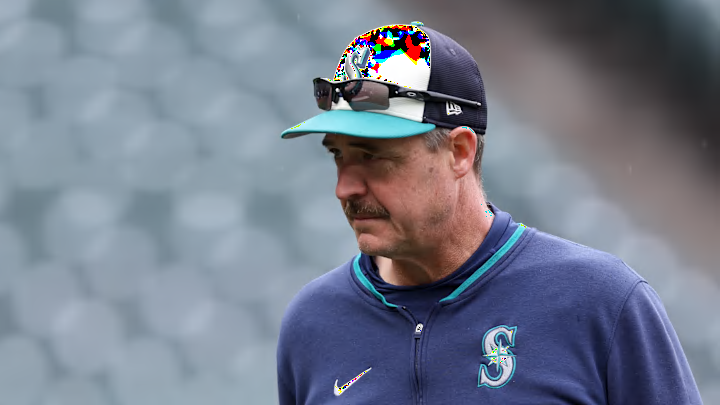
The biggest at-bat of the season went to the least-tested option. It was a role reversal that never made sense — and even Wilson seemed unsure when later asked to explain it.
If there’s a silver lining, it’s this: lessons were learned the hardest way possible. The Mariners believe left-hander Jose A. Ferrer can emerge as another late-inning option in 2026. But belief alone isn’t enough.
Execution matters. Timing matters. And in October, decisions matter more than anything.
Seattle is closer than it has ever been. That’s precisely why repeating these mistakes in 2026 would be unforgivable.
Leave a Reply