Few players in NBA history spark debate quite like Stephen Curry.
On one side, you have fans and analysts who see him as a once-in-a-generation talent—a player who didn’t just win championships, but completely changed how basketball is played. On the other side, critics argue that when you strip away the hype, Curry’s legacy may not be as untouchable as it seems.
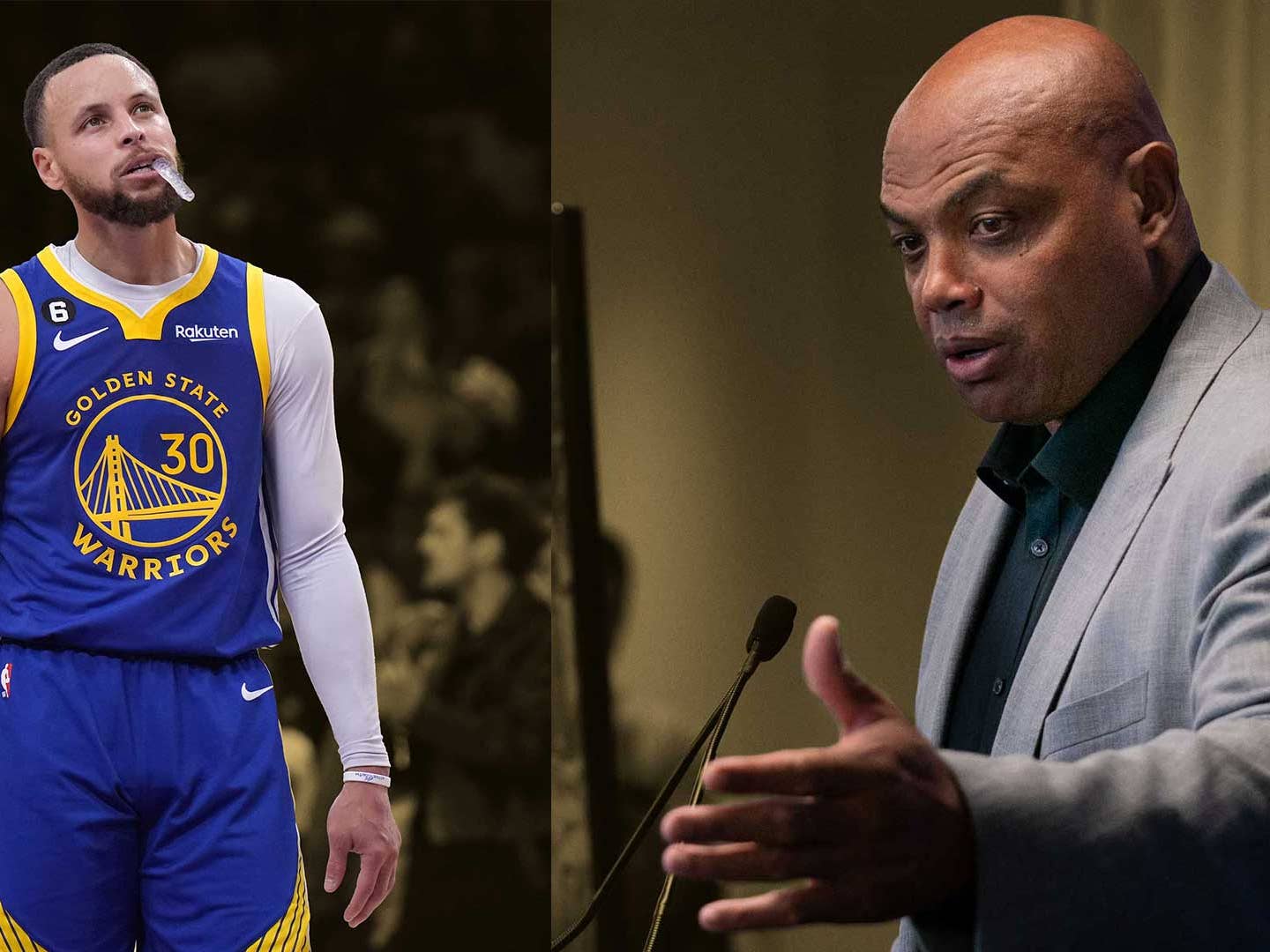
And now, voices like Charles Barkley are adding fuel to the fire.
According to some critics, the case against Curry starts with the numbers. After 17 seasons, he sits at around 26,000 career points—impressive, but not elite compared to the all-time greats who dominate scoring leaderboards. In many major statistical categories, his name doesn’t appear in the top 20. For a player often mentioned in “greatest ever” conversations, that absence raises questions.
Then there’s the Finals MVP count.
Just one.
For a player with multiple championships, critics argue that this suggests he wasn’t always the most dominant force on the biggest stage. In a league where legends are often defined by Finals performances, that detail stands out.
Defensively, the critiques continue.
Curry has never been known as a lockdown defender. While he’s improved over the years and competes within Golden State’s system, he’s not the kind of player who changes games on that end of the floor like Michael Jordan, Kobe Bryant, or even contemporaries like Kawhi Leonard.
So the argument goes:
If he’s not an all-time scorer, not a dominant defender, and doesn’t have a long list of Finals MVPs… what exactly makes him top 15?
For Charles Barkley and others, the answer is simple:
He isn’t.
But that’s only half the story.
Because what Curry lacks in traditional metrics, he makes up for in something far more difficult to quantify:
Impact.
Stephen Curry didn’t just play basketball—he redefined it.
Before Curry, the three-point shot was a weapon. After Curry, it became the foundation. He stretched defenses to distances never seen before. He forced teams to rethink spacing, shot selection, and even roster construction. Entire offensive systems across the league were rebuilt in response to what he was doing.
That’s not just influence.
That’s transformation.
And it’s something very few players in history can claim.
Critics often say Curry is “one-dimensional,” living off the three-point line. But that argument ignores the complexity of what he actually does. His off-ball movement is arguably the greatest the game has ever seen. He doesn’t just shoot—he warps defenses. Players chase him across screens, overreact to his presence, and create opportunities for everyone else on the floor.
His gravity changes the game before he even touches the ball.
And that kind of effect doesn’t show up in box scores.
It shows up in wins.
Four championships.
A dynasty that defined an era.
And a style of play that every team now tries to replicate.
As for the “three-point era” criticism—that Curry made the game worse by turning it into a shooting contest—that’s another debate entirely.
Some fans miss the physicality and mid-range artistry of past eras. They argue that today’s game lacks balance, that it relies too heavily on perimeter shooting. And yes, Curry played a major role in accelerating that shift.
But others see it differently.
They see a more efficient, more dynamic version of basketball. A game with more space, more skill, and more creativity. A game where smaller players can dominate, where shooting and IQ are just as valuable as size and strength.
In that sense, Curry didn’t ruin the game.
He evolved it.
And evolution always comes with resistance.
So where does that leave his legacy?
Is he a revolutionary genius who reshaped basketball forever?
Or a system player whose greatness is inflated by a specific era and style?
The truth probably lies somewhere in between.
What’s undeniable is that Curry’s career challenges how we define greatness. If we rely only on traditional stats, his case may seem incomplete. But if we consider influence, innovation, and the ability to change how the game is played, his resume becomes impossible to ignore.
And maybe that’s why the debate is so intense.
Because Stephen Curry forces us to ask a bigger question:
What matters more—numbers, or impact?
For some, the answer keeps him outside the top 15.
For others, it places him much higher.
And as long as those two perspectives exist, one thing is certain:
The Stephen Curry debate isn’t ending anytime soon.
Leave a Reply