After a 32-year drought, the Toronto Blue Jays finally returned to the World Series, and it was impossible to ignore. For two unforgettable weeks, baseball in Canada became more than a sport — it became a national conversation. The team from the Queen City didn’t just make October noise; it dominated headlines, talk shows, and social media far beyond traditional baseball circles. This was not nostalgia. This was a statement season.
And it almost ended with history.
The turning point came early — and painfully. On April 29, the Blue Jays were embarrassed 10–2 by the Boston Red Sox, marking their eighth loss in nine games. Toronto fell to 13–16, sitting fourth in the American League East. At that moment, sportsbooks openly listed manager John Schneider among the most likely candidates to be fired. The season felt fragile. Directionless. On the brink.
What happened next changed everything.

With virtually the same roster, Schneider steadied the clubhouse and sparked one of the most dramatic midseason reversals in recent MLB history. From that low point forward, the Blue Jays went 81–52, storming through the remainder of the schedule to finish 94–68 — the best record in the American League. They captured the AL East, edging the New York Yankees via tiebreaker and flipping the narrative from collapse to contender.
At the center of it all stood Vladimir Guerrero Jr., who delivered one of the most dominant postseason performances baseball has seen in years. Fresh off signing a staggering 14-year, $500 million contract, Guerrero elevated his game when the stakes were highest. In the playoffs, he posted video-game numbers: a .397 batting average, .494 on-base percentage, and .795 slugging, along with five doubles, eight home runs, 15 RBIs, and 20 walks — six of them intentional.
Pitchers feared him. Managers avoided him. And yet, he still punished mistakes.
Toronto eliminated the Yankees in the Division Series, exorcising decades of rivalry frustration, then took down the Seattle Mariners in the American League Championship Series. Guerrero was named ALCS MVP, cementing his status not just as a franchise cornerstone, but as the face of baseball north of the border.

The World Series matchup against the Los Angeles Dodgers felt inevitable — star power versus destiny. And for a moment, it looked like Canada’s long wait was about to end.
The Blue Jays took a 3–2 series lead, with the final two games set to be played at a roaring Rogers Centre. The Commissioner’s Trophy was within reach. The city was ready. The country was watching.
Then reality struck.
Toronto couldn’t close the door. The Dodgers, seasoned and ruthless, seized control in the final games and walked away with the championship. The trophy stayed south of the border. The Blue Jays were left just short — devastated, exhausted, and unforgettable.
Despite the heartbreak, this season changed how the Blue Jays are viewed across the league. They were no longer a talented team with potential. They were a proven contender.
Now comes the real test: sustaining it.
As of now, questions loom over the roster. Bo Bichette and veteran ace Max Scherzer are both set to enter free agency, leaving uncertainty at key positions. But Toronto’s front office has not stood still. The team locked up starting pitcher Dylan Cease on a seven-year, $210 million deal, anchoring the rotation for the foreseeable future. They also added right-hander Cody Ponce, the reigning MVP of the Korean Baseball Organization, on a three-year contract — a clear signal that the Blue Jays are continuing to think globally and aggressively.
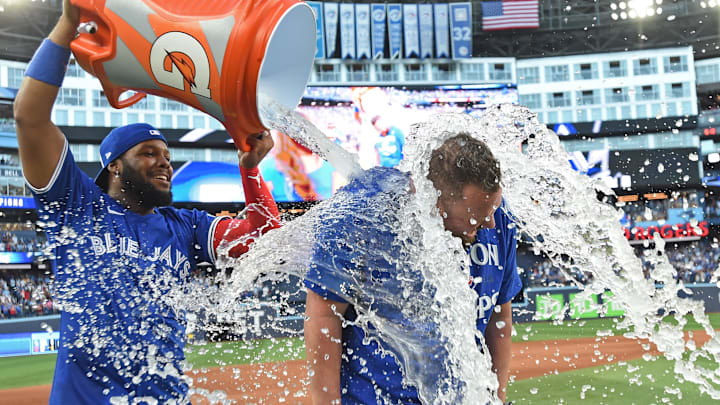
This isn’t a rebuild. It’s a reload.
The question heading into 2026 isn’t whether the Blue Jays can compete. It’s whether they can finish the job.
After 32 years of waiting, Toronto proved it belongs on baseball’s biggest stage. The drought is over. The expectations are higher than ever. And the rest of the league has been put on notice.
Because if this season taught us anything, it’s this:
the Blue Jays are no longer chasing history — they’re hunting it.
Leave a Reply